
How to Search Alcona County Court Records
Alcona County does not run its own court records portal. The documented public search path is the statewide MiCOURT case search system, run by the Michigan judiciary. That system reaches circuit, district, and probate matters, including Alcona County court records. The local court pages point people to the clerk and to each court, yet the online lookup lives in the state system. A public display page also exists for the Alcona County Trial Court, showing a slim slice of the docket for circuit, family, and probate cases.
A clean search starts with the right inputs. The core fields are a case number, a first name, and a last name. A case number returns the tightest result. When only a name is known, last name plus first name works best, and filters such as case type, case year, judge, or a date range trim a broad list. The Alcona County Trial Court display surfaces only party name, hearing time, hearing info, case number, and CTN. That is enough for a hearing date, not a full case file.
The county's own website is often the first stop, and its main menu links out to each court and to the clerk. The Alcona County homepage gathers the courthouse hours, phone directory, and court navigation in one place.
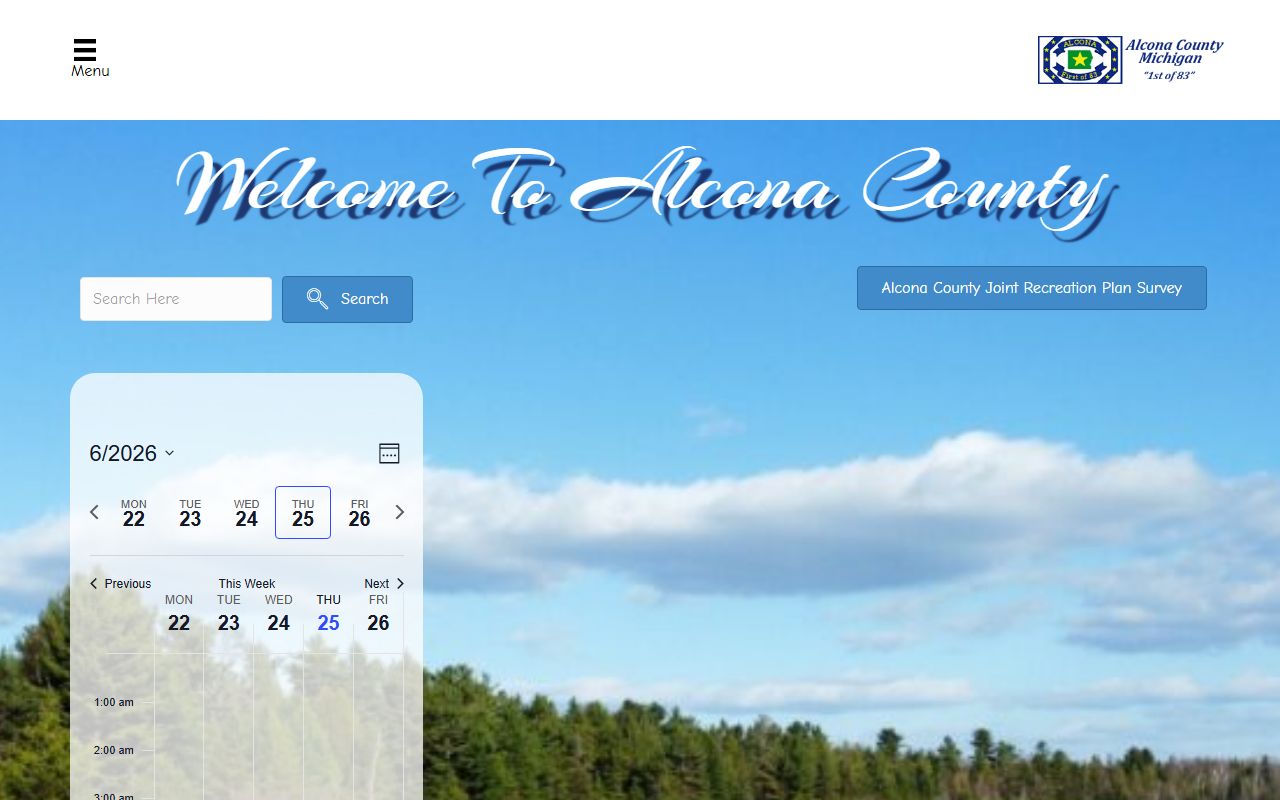
That homepage routes an Alcona County records search toward the correct counter before a visitor has to guess. From there, the search itself follows a short, repeatable order.
- Identify the case type first, since district, circuit, and probate files sit on different tracks.
- Search by case number when you have it, because that is the cleanest path to one file.
- If you only hold a name, enter the last name plus the first name.
- Narrow broad results with case year, status, judge, or a date range.
- Use the public display when you need just a hearing date, a case number, or a CTN.
- When the record is old, sealed, or not online, ask the county clerk or the court counter.
The MiCOURT search screen offers a small set of primary inputs plus a wider band of filters. The table below lists the fields a public searcher works with most often.
| Field Label | Type | Required | Notes |
|---|---|---|---|
| Case Number | text | Yes for case lookup | Exact case number as entered. |
| First Name | text | Optional | Used with last name for a person search. |
| Last Name | text | Optional | Used with first name for a person search. |
| Case Type Category | filter | Optional | Civil, criminal, domestic, juvenile, probate, traffic, and more. |
| Case Year | filter | Optional | Year the case was filed. |
| Case Status | filter | Optional | Open, closed, disposed, deferred, mediation. |
| Judge | filter | Optional | Assigned judge name. |
| Date of Birth | filter | Optional | Narrows a common name. |
| File Date From / To | filter | Optional | Date range for filings. |
Note: Michigan court records fall under court rule, so some case files stay off the public portal even when a case is otherwise open to inspection.
The Alcona County Judicial System
Alcona County sits in Michigan's standard state judiciary, so the ladder is familiar, but the local workflow spreads across several offices. Circuit court is the general-jurisdiction trial court. District court is the lower trial court that most people meet first. Probate court is a separate trial court for estates and family-protection matters. Above them sit the Michigan Court of Appeals and the Michigan Supreme Court. The county's own pages mirror that split with the 23rd Circuit Court, the 81st District Court, and the Probate Court.
The 23rd Judicial Circuit covers Alcona, Arenac, Iosco, and Oscoda counties and seats three circuit judges. The County Clerk also serves as the official clerk for the Alcona division of that circuit. The 23rd Circuit Court page lays out its jurisdiction and staff for the four-county region.
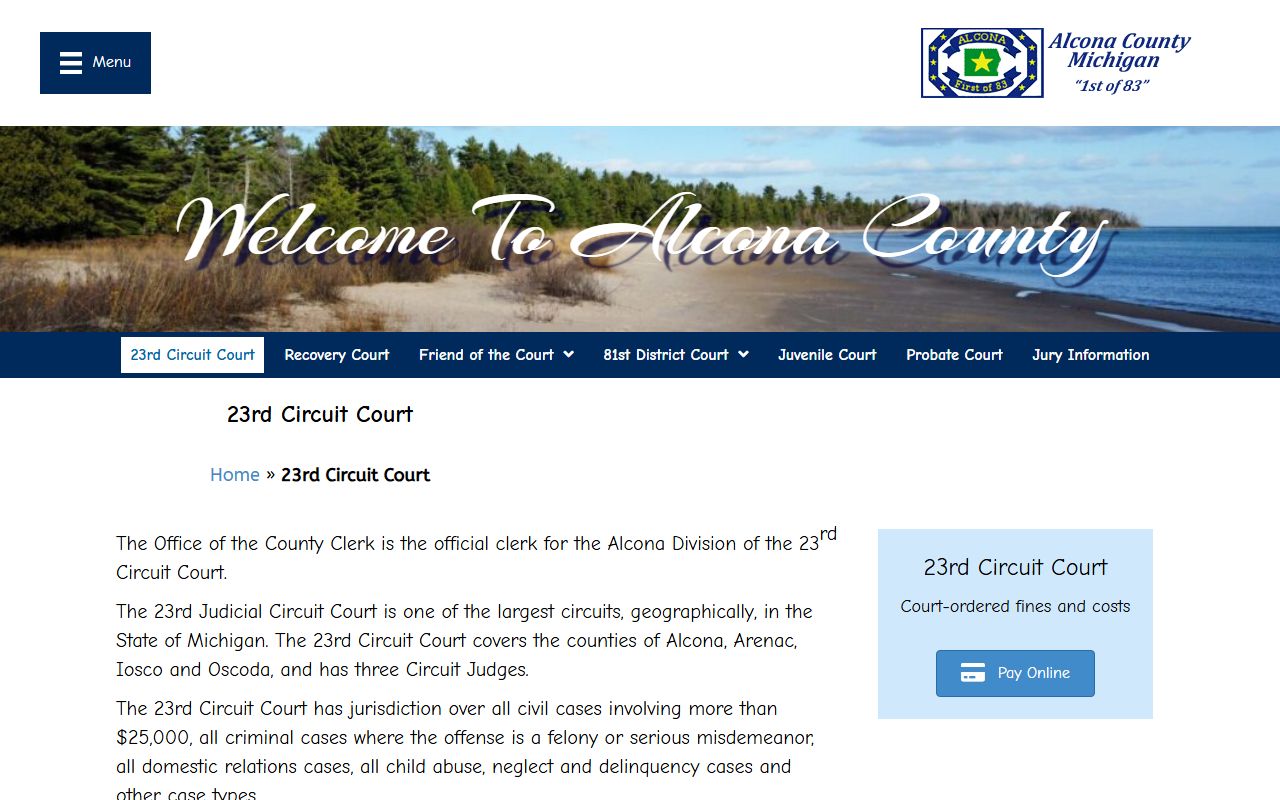
That circuit court hears felonies, serious misdemeanors, domestic relations, child protection, and civil claims above the district threshold. Appeals from district court also land there. Cases climb a clear path when either side challenges a ruling.
Case flow: District Court › Circuit Court › Michigan Court of Appeals › Michigan Supreme Court
| Court | Jurisdiction | Case Types |
|---|---|---|
| 23rd Circuit Court | General jurisdiction, four counties | Felonies, domestic relations, child protection, civil claims over $25,000, appeals from district court. |
| 81st District Court | Limited jurisdiction, lower trial court | Traffic, misdemeanors, landlord-tenant, small claims, civil up to $25,000, preliminary felony hearings. |
| Probate Court | Estates and family protection | Estates, guardianships, conservatorships, name changes, mental-health commitments. |
| Michigan Court of Appeals | Intermediate appellate | Appeals from circuit and probate matters statewide. |
Court Records Available in Alcona County
Alcona County court records fall into the standard Michigan categories, and the split by court level makes them easy to describe. Circuit court holds larger civil claims, felonies, and family files. District court holds smaller civil matters, misdemeanors, traffic, and the early stages of felony cases. Probate court holds estates and guardianship files. Each track produces its own record set, and each set carries its own access rules.
The 81st District Court is the busiest public-facing venue for everyday matters. The 81st District Court page confirms it handles traffic and ordinance cases, landlord-tenant disputes, small claims, misdemeanors, and preliminary felony hearings.
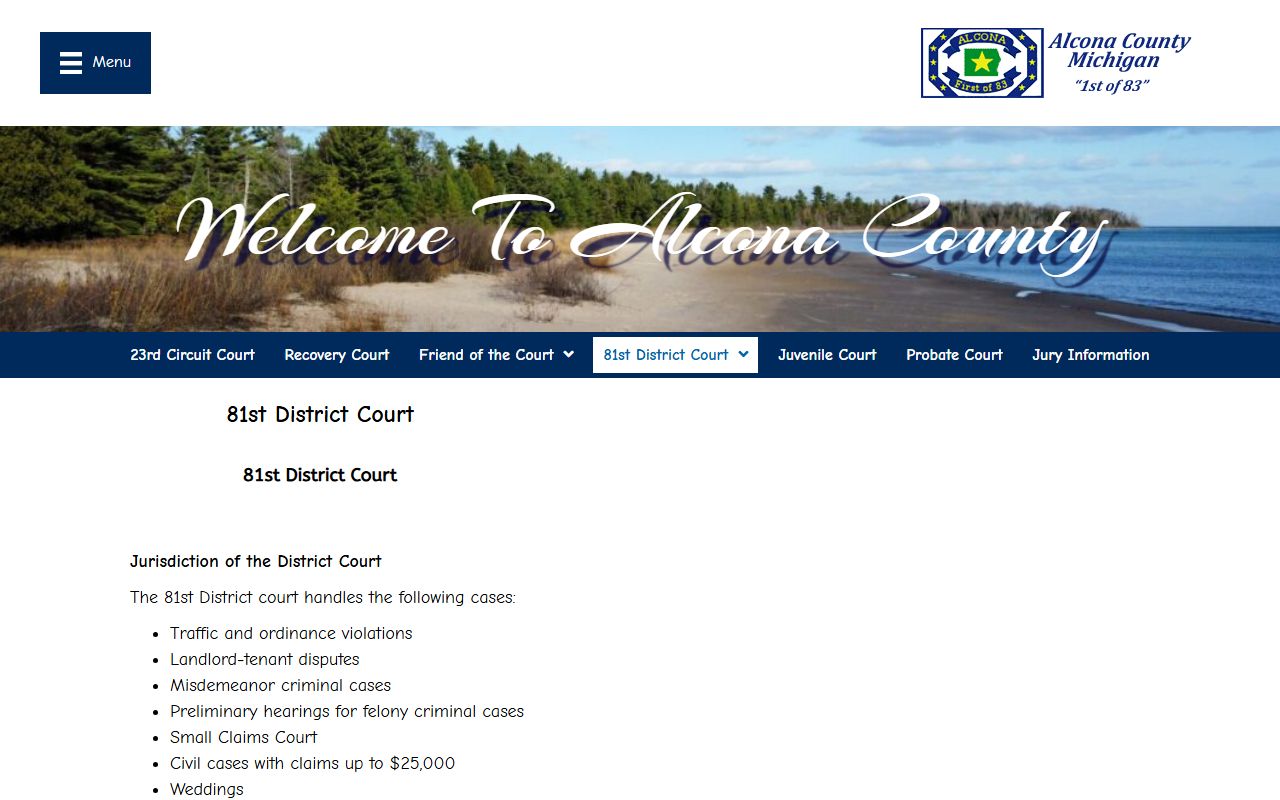
That page shows why the district court is where most residents first touch the record system. The main record categories break down like this.
- Criminal records - complaints, pleas, sentencing, probation, and restitution across district and circuit files.
- Civil records - complaints, answers, motions, orders, judgments, and fee entries.
- Family records - divorce, custody, child support, and Friend of the Court enforcement in circuit court.
- Probate records - wills, estate inventories, guardianships, conservatorships, and name changes.
- Traffic records - citations, pleas, payment status, and clearance notices in district court.
Small-claims and landlord-tenant filings also flow through the district court, while appeals move up to circuit court. Juvenile and adoption matters carry much narrower access than adult files.
What Alcona County Court Records Show
Alcona County court records carry a fairly steady set of fields across the county's court system. A public record can look very different from a full judicial file. On the Alcona County Trial Court display, the visible calendar fields are party name, time, hearing info, case number, and CTN. A deeper file adds parties, charges, motions, orders, and a disposition once a case ends.
The state's court operations office publishes the framework that governs how those files are kept and released. The Michigan records-management page ties case-record handling to court rule rather than to a county policy.
That framework explains why some fields are open and others stay masked. The table below maps the common fields a searcher meets to what each one shows.
| Field | What It Shows |
|---|---|
| Case Number | The unique file identifier used to pull one case. |
| Filing Date | The date the case opened with the court. |
| Party Name | The plaintiff, defendant, petitioner, or respondent. |
| Case Type | Civil, criminal, family, probate, or traffic track. |
| Hearing Info | The next hearing date, time, and type. |
| Disposition | How the case ended or where it now stands. |
| CTN | The case-tracking number that follows a criminal matter. |
Note: Public copies redact full Social Security numbers, financial account details, and protected minor information under Michigan court rule.
Alcona County Court Records Access Laws
Alcona County's access story rests on a short stack of Michigan statutes and court rules rather than a giant legal treatise. County government records run through the Freedom of Information Act. Judicial records run through court rule. The county clerk is the intake point for records requests, and the county responds to a FOIA request within five business days, with a possible ten-day extension.
The state's transparency policy sits at the top of that stack. The Michigan FOIA policy section sets the presumption that public records are open unless a specific exemption applies.
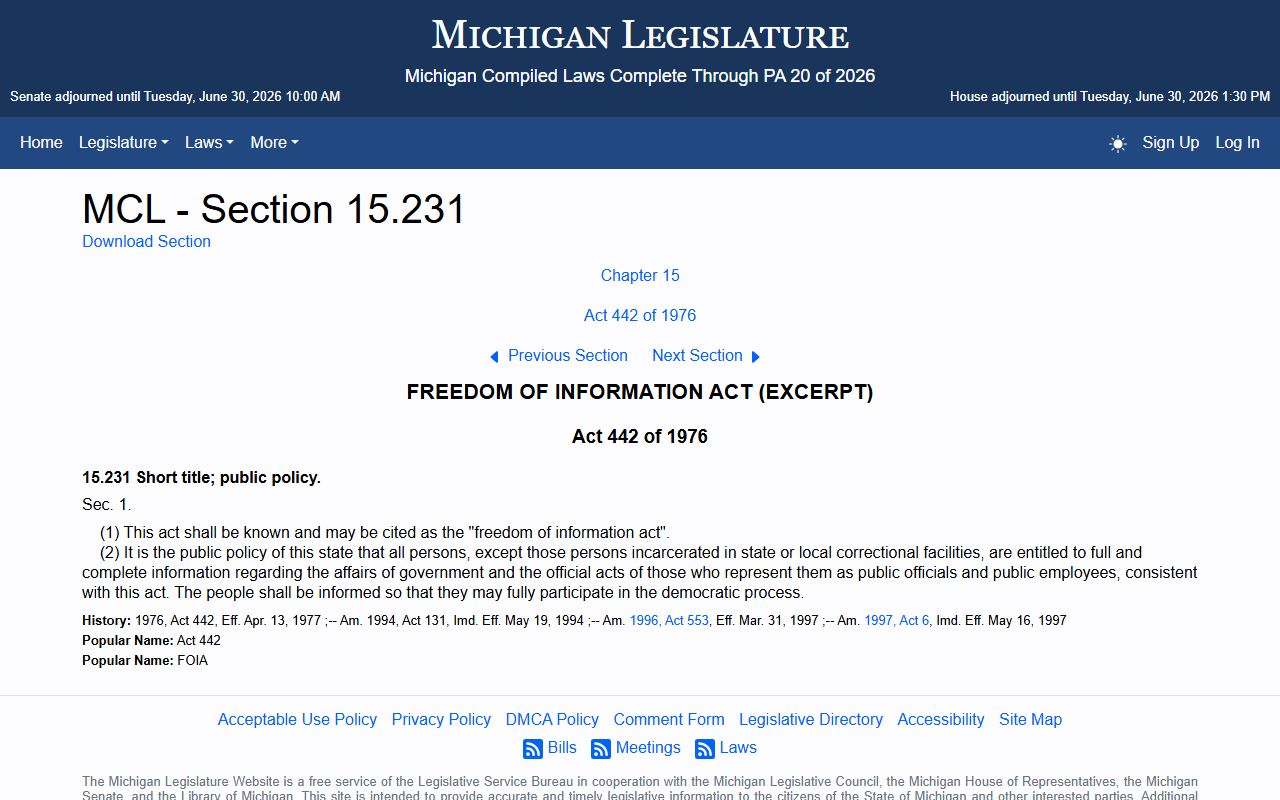
That policy shapes how county offices answer a request, while the courts follow their own rule. The key statutes for an Alcona County records search read as follows.
Key Statutes:
MCL 15.231 - Michigan FOIA policy. County records are presumed public unless an exemption covers them.
MCL 15.243 - FOIA exemptions. Lets a public body withhold set categories, such as information of a personal nature.
MCR 8.119 - court records rule. Case files follow court rule, and access can be limited by statute, rule, or order.
MCL 780.621 - conviction set-aside act. Gives the practical path to expunge or seal an eligible conviction.
Records That Are Restricted or Confidential
The public-record picture narrows fast when a case touches juveniles, adoptions, sealed convictions, or mental-health proceedings. Michigan court rules and specific statutes control those files. The county pages are far more open about adult court, probate, and clerk access than about juvenile or confidential matters, which is exactly what a reader should expect. A sealed or set-aside file is not the same thing as an ordinary public record.
Expungement is the most common way a record leaves public view. The 81st District Court page turns the state set-aside act into a plain checklist. District court handles misdemeanor set-asides, while felonies go to circuit court. The steps below track that guidance.
- Check that the conviction is eligible under Michigan's set-aside law.
- Confirm at least five years have passed since the sentence, and that the offense is not a traffic case.
- Get fingerprints, which cost about $50 through the Michigan State Police, and pay the $15 record-check fee.
- File the set-aside papers with the correct court and serve the required state offices.
- Attend the hearing in person, since the applicant must be present.
- If granted, the conviction is set aside and access to the file becomes limited.
The set-aside process runs roughly 60 to 90 days from filing. Alcona County court staff cannot give legal advice, so many applicants use counsel or the court's self-help forms.
Recovery Court in Alcona County
The one clearly documented specialty court in the county materials is Recovery Court. The program began accepting Alcona County participants in June 2005 and expanded to Iosco and Oscoda counties in October 2010. Its aim is to cut substance abuse, crime, and repeat offending by combining treatment, supervision, and judicial oversight for nonviolent, drug- or alcohol-dependent defendants. Hon. Laura A. Frawley serves as the Drug Court Judge, and the district court probation officer coordinates screening.
Recovery Court is a staffed county workflow, not an abstract idea. It runs on set rules for length, eligibility, and referral.
- Program length runs 12 to 24 months.
- Participants are adults 18 or older with felony, misdemeanor, or probation-violation matters.
- Violent offenders are excluded.
- Referrals come from judges, prosecutors, defense attorneys, probation officers, police, community members, and self-referrals.
- The arresting jurisdiction's prosecutor must approve the referral.
No county page documents a separate veterans, mental-health, or family treatment court. The county does run juvenile probation, drug and alcohol testing, and Friend of the Court enforcement, yet those are not standalone specialty courts.
Alcona County Sheriff and Jail
The Alcona County Sheriff's Office is unusually honest about what it does and does not do. Sheriff Scott A. Stephenson leads the office at 214 W Main St. in Harrisville, reachable at (989) 724-6271, with a non-emergency line at (989) 724-0911. The Alcona County Sheriff homepage lists corrections, civil process, fingerprinting, drug and alcohol testing, and an E-Tip form.
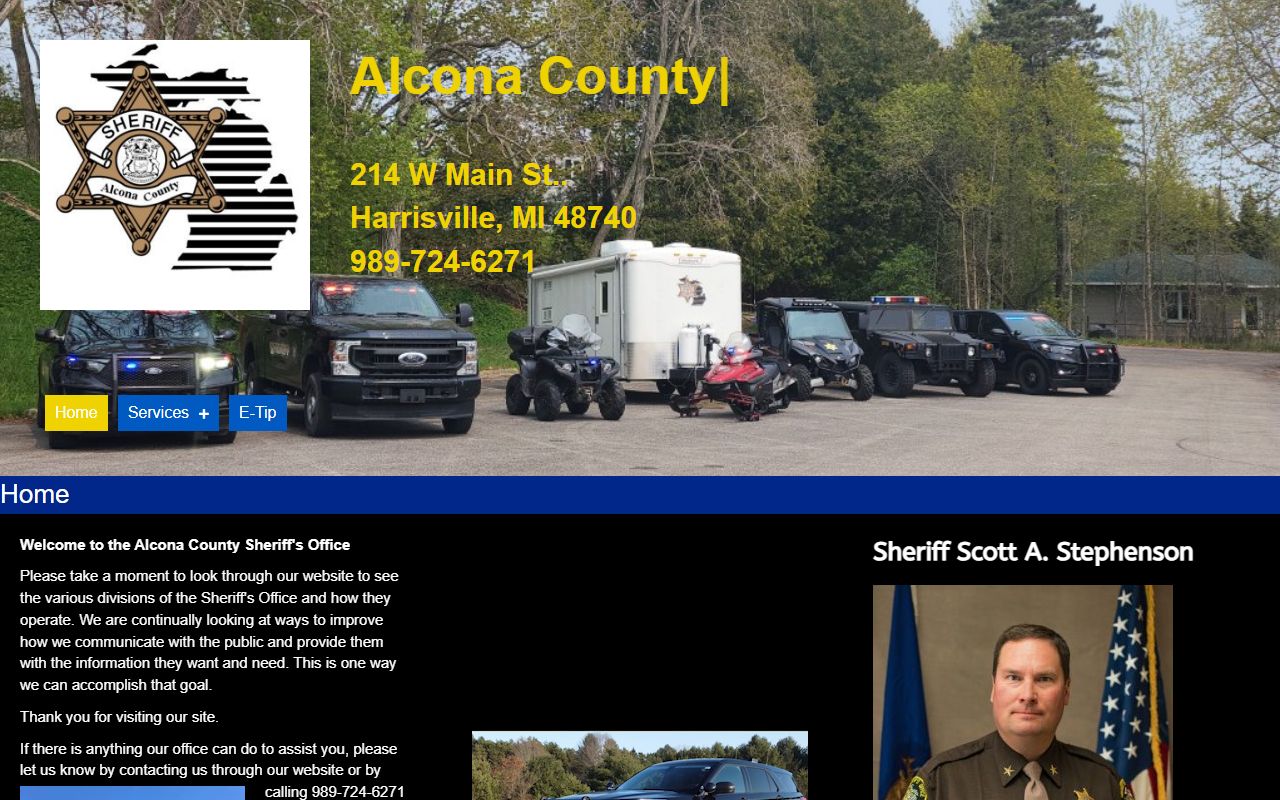
The corrections page explains why the county has no full public jail roster. The county jail is not fully staffed overnight and houses inmates only on a limited basis. Misdemeanor defendants often turn themselves in for booking before arraignment. When someone cannot post bail, the office transports them to the Iosco County Jail. In 2023, the county booked 64 defendants through the Alcona jail and lodged 109 directly in Iosco.
Because no county roster exists, the main online custody path is the Michigan Department of Corrections OTIS system. The OTIS offender search covers state prisoners, parolees, probationers, and people discharged within three years, not county-jail inmates. For the full lookup workflow and housing caveats, the Alcona County inmate records page walks through OTIS, VINE alerts, and the Iosco transfer pattern.
Note: The county publishes no visitation, mail, or commissary schedule, so a family should first confirm which jail actually holds the person before planning a visit.
Marriage, Divorce, and Probate Records
Marriage licensing and vital-record copies run through the County Clerk, while divorce files live in circuit court and estates run through probate court. That split trips up a lot of searchers. A divorce case file is a court record, not a vital record, and a marriage certificate is a separate certified document. Certified copies from the clerk carry a raised seal.
The probate court handles more than wills. The Alcona County Probate Court page lists estates, trusts, small-estate assignments under $20,000, guardianships, conservatorships, adult and minor name changes, and mental-health commitments.
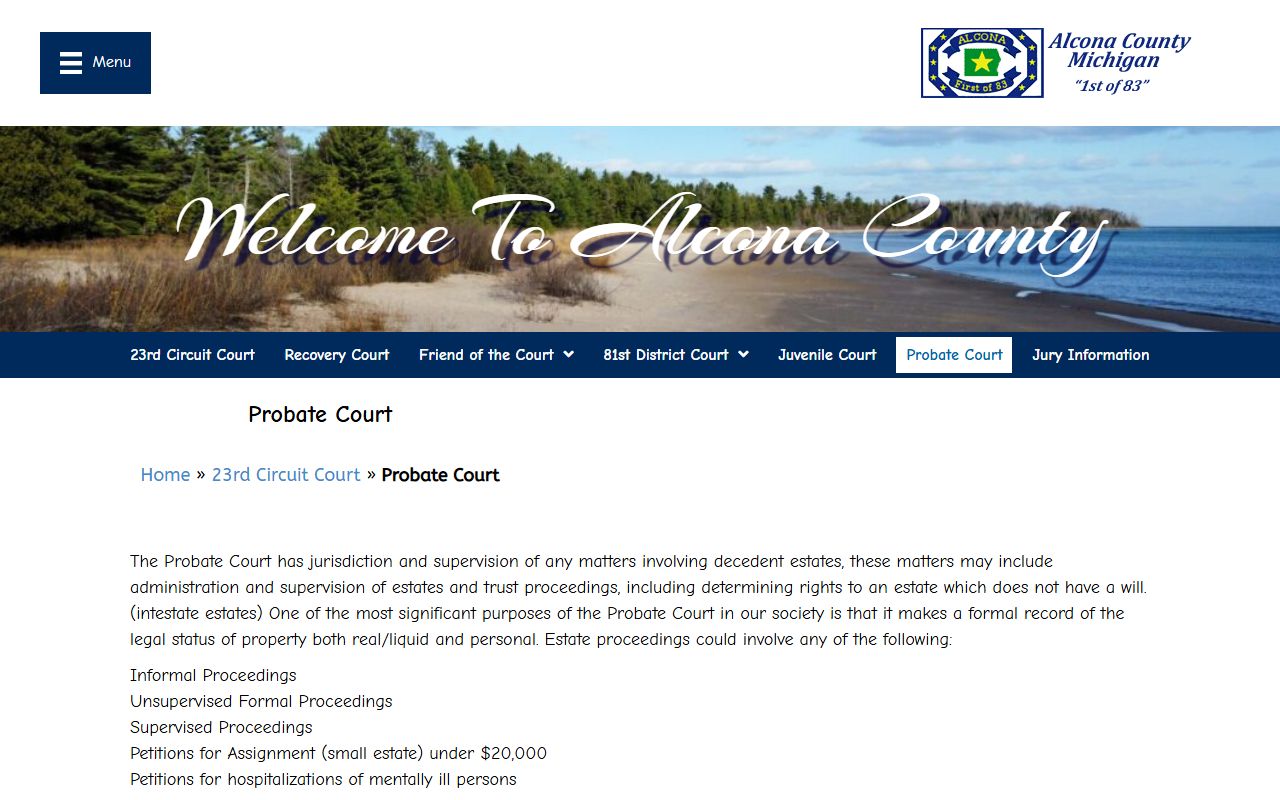
That page shows how broad the probate docket runs for a small county. The clerk's office also records deeds and land documents through a related office. The Alcona County Register of Deeds page covers recording fees, property searches, and passport acceptance.
For a certified copy, the Alcona County marriage and divorce records page covers the clerk workflow. A short glossary helps when probate paperwork uses terms most people rarely read.
- Testator
- The person who made the will.
- Executor
- The person named to carry out a will.
- Intestate
- Dying without a valid will.
- Guardian
- A person responsible for another's care or decisions.
- Conservator
- A person managing another's finances.
- Disposition
- The way a court matter ended or moved.
Alcona County Court Records Fees
Most everyday record fees at Alcona County are modest and set by the office that keeps the file. The County Clerk handles vital-record copies, business filings, and notary commissions. Certified vital-record copies cost $15 for the first copy and $5 for each additional copy of the same record ordered at the same time. Business-name and notary filings each carry a flat $10 fee.
The Alcona County Clerk page names Stephany Eller as County Clerk and Brooke Sommer as Circuit Court Clerk, and it sets the office hours and services.
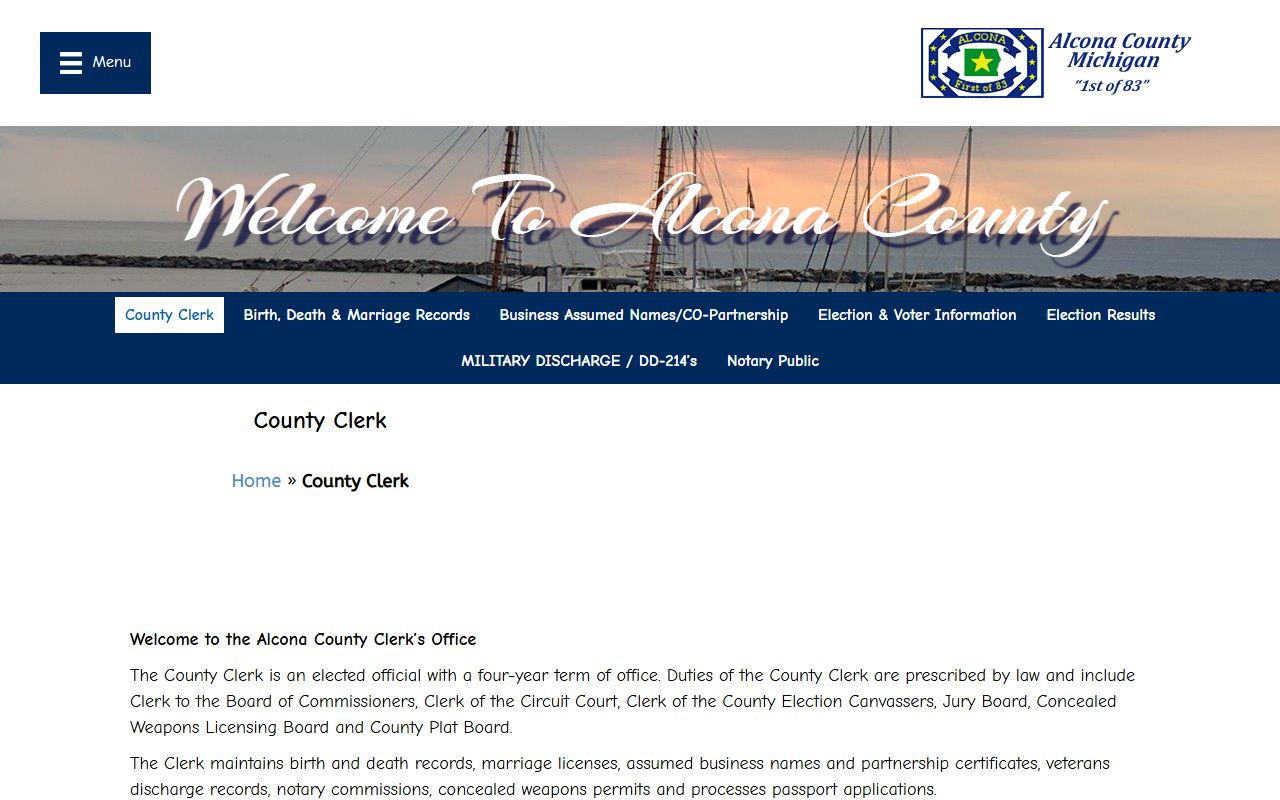
That office is the practical hub for certified copies and business records. The common fees line up as follows.
| Item | Amount |
|---|---|
| First certified vital-record copy | $15 |
| Each additional copy, same record | $5 |
| Assumed name / co-partnership filing | $10 |
| Notary filing fee | $10 |
| Expungement record-check fee | $15 |
| Traffic citation clearance | $45 |
Note: Certified copies carry a raised seal, and uncertified prints pulled from an online display may not be accepted in a court proceeding.
How Alcona County Courts Compare
Choosing the right court is half of a successful Alcona County court records search. The three trial courts overlap in address but not in job. District court and circuit court both hear civil cases, yet a dollar threshold decides which one takes the file. Probate court runs on a separate track built around estates and vulnerable-person matters. The comparison below sorts the three by what they hear and where their appeals go.
| Feature | 81st District Court | 23rd Circuit Court | Probate Court |
|---|---|---|---|
| Main case types | Traffic, misdemeanors, small claims, landlord-tenant | Felonies, domestic relations, child protection | Estates, guardianships, conservatorships |
| Civil money limit | Up to $25,000 | Over $25,000 | Small estates under $20,000 |
| Appeals go to | Circuit court | Court of Appeals | Court of Appeals |
| Example filing | Speeding citation | Divorce complaint | Petition to open an estate |
The overlap matters most for felonies. A felony starts in district court for its preliminary stages, then moves to circuit court for trial and sentencing. Knowing that handoff keeps a searcher from looking in the wrong file at the wrong stage.
Alcona County Traffic and Driver Records
Traffic matters in Alcona County run through the 81st District Court. Citations can be paid in person, by mail, or online through Government Payment Services at (888) 604-7888. Online and phone payments need the citation number and the Alcona pay-location code, which is 1044. An unpaid citation picks up a $25 late fee after 14 days. After 56 days, another 20% is added and the driver's license is suspended.
The court traffic record and the state driver record are two different files, and mixing them up leads people to the wrong office. The court file holds the citation, charge, court date, and disposition. The state driver record is the Secretary of State compilation of a person's history, points, and suspensions.
- Court traffic record: citation number, charge, statute, court date, disposition, and balance.
- State driver record: license status, convictions, points, and suspension history.
- Online driver-record fee: $16, visible for seven days.
- Mail driver-record fee: $15 for a copy, $16 for a certified copy.
If a court entry on the driver record is wrong, the fix runs through the Alcona County court that entered it, not the Secretary of State. The court issues a corrected abstract that then updates the state driver record.
Alcona County Courthouse Contacts
Alcona County runs its court system from a single downtown Harrisville core. The clerk, district court, circuit court, probate court, Friend of the Court, and prosecutor all share the same courthouse address and connect through one phone network. That shared footprint means a single visit can cover several record requests, though the specific counter still matters. The office contact cards below list the lines a records searcher uses most.
County Clerk / Circuit Court
106 5th St., PO Box 308
Harrisville, MI 48740
(989) 724-9410
All three offices keep the same schedule, Monday through Friday, 8:30 a.m. to 4:30 p.m., with a lunch closure from noon to 1 p.m. The sheriff's office sits nearby on West Main Street.
History of Alcona County Courts
Alcona County was set aside in 1840 under the name Negwegon and renamed Alcona in 1843, according to the Library of Michigan county guide. The court history from official sources is mostly structural rather than dramatic. One courthouse complex, one county-clerk and circuit-clerk office, one district court, one probate court, and a circuit court that spans four counties form the whole picture. County materials do not publish a first-courthouse story, a fire record, or a relocation timeline.
The clearest modern chapter is the treatment-court layer. Recovery Court started in 2005 and expanded in 2010, which shows a small rural county adapting its bench to substance-use caseloads without building a large separate bureaucracy. County board minutes add a newer operational thread, with courthouse-security updates tied to state court administrative requirements and jail programming coordinated through the neighboring Iosco County Jail.
Note: The county's current court identity is centered in Harrisville and supported by statewide court systems rather than a scattered set of historic courthouse buildings.
Frequently Asked Questions
Is there an Alcona County court records portal?
No local portal exists. Alcona County court records are searched through the statewide MiCOURT case-search system and the Alcona County Trial Court public display. The county court pages point people to the clerk and the courts, while the online lookup lives in the state judiciary system. For older or non-digitized files, the county clerk counter is the fallback.
Which court holds my case?
It depends on the case type. District court holds traffic, misdemeanors, small claims, and landlord-tenant matters. Circuit court holds felonies, domestic relations, and larger civil claims. Probate court holds estates, guardianships, conservatorships, and name changes. A felony passes through district court for preliminary stages, then moves to circuit court for trial and sentencing.
How much does a certified copy cost?
The County Clerk charges $15 for the first certified vital-record copy and $5 for each additional copy of the same record ordered at the same time. Certified copies carry a raised seal. Business-name filings and notary filings each cost $10. Certified copies are the versions accepted in court, so an uncertified online print may not work for a legal proceeding.
Can I find an inmate through the county?
The county publishes no public jail roster, because the Alcona jail is not fully staffed overnight and houses inmates on a limited basis. Many defendants are lodged in the Iosco County Jail instead. The main online custody path is the Michigan OTIS system, which covers state prisoners and recent discharges, not county-jail inmates.
How do I request records the portal does not show?
County government records go through a Freedom of Information Act request filed with the County Clerk, who acts as the intake point. The county responds within five business days and may extend by ten more. Court case files instead follow court rule, so a records request for a sealed or limited file may need a court order.
Are Alcona County court records free to view?
Basic public case information on the state display is free to view. Certified copies, plain copies, and FOIA requests can carry fees set by the office that keeps the record. The county may require a deposit when the estimated cost of a records request runs over $50.